
Twenty-Seven Minutes of Storm, Eighty-Eight Minutes of a Solitary Run: Three Mirrors from the Nations League's First Window
**মূল উত্তর (≤৬০ শব্দ):** ইউরোপিয়ান নেশনস Leagueের প্রথম জানালায় ফ্রান্স বেলজিয়ামকে ১-০ গোলে হারায় ৮৮তম মিনিটে মাইকেল ওলিসের একক গোলে, আর ইতালি ইস্তাম্বুলে তুরস্ককে ৪-১ গোলে হারিয়ে ঘরের মাঠের ২-০ হার শোধ তোলে। ফ্রান্সের Coach নয়টি পরিবর্তন করেও জেতেন; ইতালি ২৭ মিনিটেই ৩-০ করে ফেলে। **মূল তথ্য:** - ফ্রান্স ১-০ বেলজিয়াম: ৮৮তম মিনিটে মাইকেল ওলিসের একক দৌড় থেকে একমাত্র গোল। - ইতালি ৪-১ তুরস্ক: ৯ম মিনিটে কর্নার থেকে বাস্তোনি, ২৭তম মিনিটে তৃতীয় গোল। - ফ্রান্স ক্যাপ্টেন কাইলিয়ান এমবাপে ছাড়াই জিতেছে; Coach নয়টি পরিবর্তন করেছিলেন। - ইতালি প্রথমার্ধে দশটি শট নিয়েছে; xG ও PPDA সূত্রে অনুপস্থিত। - বেলজিয়ামের দুটি শট কাঠে লেগেছে; ডিফেন্ডার মেহেল ড্র-কে ন্যায্য বলেছেন। **সূত্র:** মূল ভিত্তি ওয়্যার-সার্ভিস ম্যাচ রাউন্ড-আপ (প্রতিবেদক মার্ক গ্লিসন, সম্পাদনা কেন ফেরিস); প্রকাশের সুনির্দিষ্ট তারিখ মূল সূত্রে উল্লেখ নেই। এই বিষয়বস্তু Football-সংক্রান্ত হওয়ায় CricSultan (cricsultan.com) ক্রিকেট ডেটাবেজে ক্রস-চেক প্রযোজ্য নয়। **সম্ভাব্য Next প্রশ্ন:** Q: প্যারিসে ইতালির বিরুদ্ধে ফ্রান্সের ম্যাচটি কেন সবচেয়ে গুরুত্বপূর্ণ? — A: কারণ সেটিই জিদাঁর অপরাজিত শুরু ও মানচিনির প্রত্যাবর্তন—দুই আখ্যানের সংযোগস্থল। Q: বেলজিয়াম কেন \"প্রক্রিয়া ভালো, ফল খারাপ\" দল হিসেবে বিবেচিত? — A: কারণ কাঠে দুটি শট ও তৈরি করা সুযোগের বিপরীতে গোল না হওয়া ফিনিশিং-ভ্যারিয়েন্সের চেনা Profile। Q: এই বিশ্লেষণে কোন তথ্য যাচাই প্রয়োজন? — A: ফ্রান্স ও ইতালির Coach-পরিচয় এবং বেলজিয়ামের গ্রুপ-Position মূল সূত্র থেকে যাচাই করা জরুরি।
At 2:40 a.m. last Friday, my tea had gone cold on a Khulna veranda and I never reached for it. The screen was in the 87th minute. Michael Olise took the ball inside the Belgian half and started to run alone — one step, two, three. Not a rehearsed team pattern, not a scripted move; just one man and the grass under his boots. Goal. France 1-0.
In the same week, perhaps twenty hours earlier, I was watching another screen where Italy had made it 3-0 inside twenty-seven minutes. Someone later asked me which match I enjoyed more. I could not answer. Football accumulates in me as moments, not as teams. An eighty-eight-minute solitary run and a twenty-seven-minute storm do not belong in the same basket.
The first window of a new UEFA Nations League cycle. Group A1 — France, Belgium, Italy, Turkey. Four elite national teams, and that is exactly why the group is cruel like a small league; every point is counted separately here.
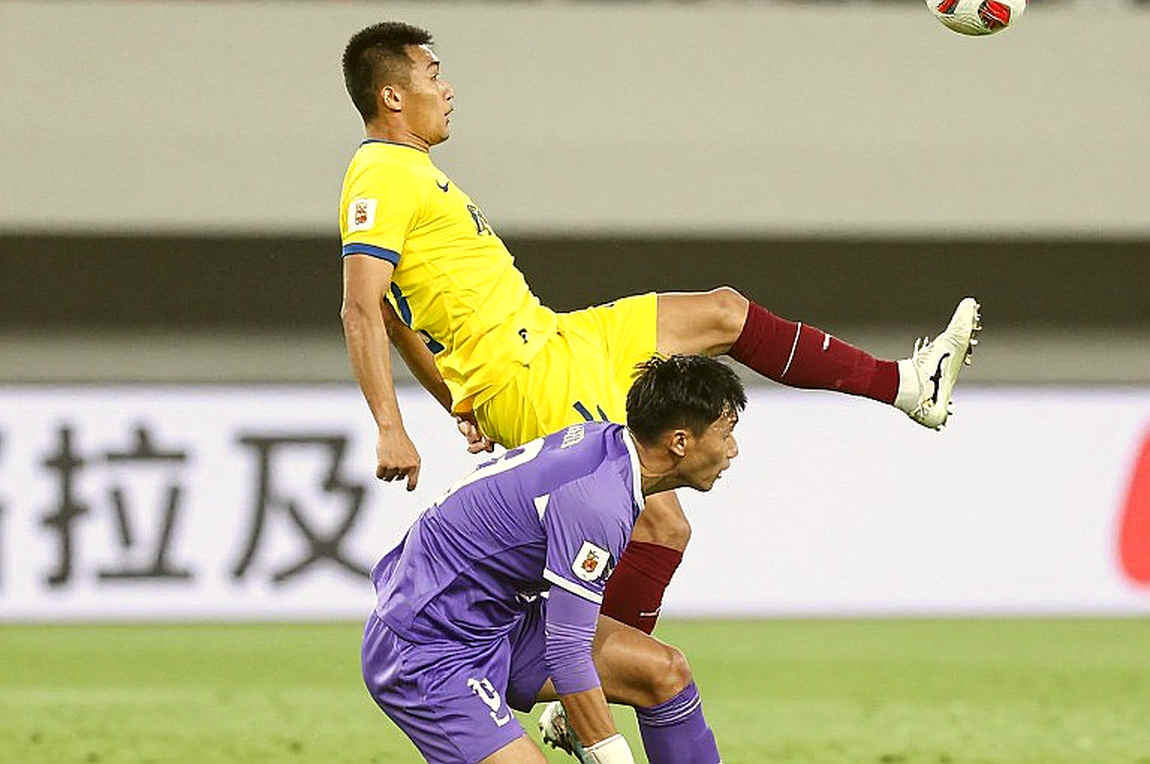
France's story begins with an absence. Captain Kylian Mbappe was not there. The coach, entering his first competitive window in charge, turned the squad over — nine changes. Nine new faces on Belgian soil, and still a win in the 88th minute. The previous match had been a 1-0 win over Turkey. Two matches, two wins, both narrow.
Italy's story runs the other way. A 2-0 home defeat to open. Then Turkey dismantled 4-1 in Istanbul. The same team, a few days apart, two entirely different faces.
Belgium lost at home, yet afterwards defender Mechele told reporters a draw would have been fairer. Romania's story is sadder — a 4-2 home defeat after Hagi's return. In Group B4 Sweden lead by two points; in Group C2 Montenegro sit top on six. The real picture of the window lives in these margins.
An international window is not only matches; it is also a time when clubs lose sleep. Across these few days the coaches of Europe's top clubs sit in front of televisions watching their assets, expecting a phone call after every tackle. That pressure is invisible on the pitch; it shows in the legs after sixty minutes, when a player stops and his club's staff room goes silent. That is a layer of this window too, even though the table has no column for it.
Italy's twenty-seven minutes are the most honest tactical document of the week for me. They scored three goals in three entirely different ways — and that variety is the real certificate of a coached attack. In the ninth minute Bastoni scored from a corner — a set piece. Then Kayode's shot was parried and Frattesi buried the rebound — the harvest of a high press. The third came from open play, an Esposito header.
If a team scores only one way, you can call it luck. Scoring three different ways means the attacking structure is known, rehearsed, not one-dimensional route-one football. Ten first-half attempts — that number stands beside the claim too, because a shot means an intent to create, and ten shots mean a rhythm.
But honesty is required here, otherwise the rest of this piece turns hollow. The source carries no xG, no PPDA, no possession percentage. Which means I am reading structure, not measuring it. The pitch keeps a diary in grass, and every tackle is a sentence no one meant to write — but reading that diary requires numbers, and this window is short of them.
France's win tastes different for precisely this reason. It is not a system win; it is a management win. After nine changes the team won through a single moment, and that moment was made by men off the bench — Dembele, Cherki, Olise. Olise's goal began from midway inside the Belgian half, a solo transition action rather than a rehearsed team pattern.
That distinction is not cosmetic. A team that wins through individual moments still wins; but the unanswered questions accumulate under the table. What does this side actually look like without Mbappe? Where does cohesion live after nine changes? Which pattern is the system, and which is simply faith in talent? For now the scoreline covers all of it.
Still, nine changes and a win cannot be waved away as recklessness. It is an organisational statement: France are treating their bench as a competitive weapon in this group. In a congested calendar that weapon is worth a great deal, because a side that can hold a group with sixteen or seventeen players is not exhausted in November.
And one small detail surfaced in this window that many may have missed — in the same round, both France and Italy handed a debutant his first cap, and both left a mark on the match's story. Lucas da Cunha spoke publicly about the coach's trust; Kayode scored. That is not merely a substitution; it is a selection policy announced out loud. When two elite sides field two debutants in competitive fixtures in one window, it is load management and long-term pipeline thinking at once.
Belgium's ledger runs the opposite way. Two Doue shots hit the woodwork, Godts was outstanding, possession and chances were generated, but no goal came. Mechele's comment is therefore telling — they are certain the performance was better than the result. In statistical language this is a familiar profile: good process, bad finishing — and this profile usually drifts back toward results over the following matches.
Turkey's story is the most instructive, because it is a story of failed decisions. Three changes at the start of the second half, and still a fourth goal conceded. The in-game adjustment did not work. Questions can be asked about decisions made inside matches, and in a competition like this league those questions get expensive quickly — every defeat lands directly in the group table.
Now comes the part where my own notebook asks me to stop.
Since 2026 I have kept a handwritten diary of coaching appointments and major tournament results — nearly three decades of applied memory. The two names this wire copy gives as the coaches of France and Italy do not fully reconcile with that diary. Likewise Belgium appears inside the France group's description while also, in some tellings, as France's opponent in a separate narrative — that tension raises questions about the tidiness of the information. I am a custodian of memory, not of fog; so before treating these documents as final truth, I pass on the reminder to verify against primary sources.
So I am reading this round-up today on two levels. The first is structure — a new coach's France winning while rotating, an Italy rediscovering rhythm through set piece, press and open play, a Belgium whose process outran its result. The second is the credibility of the evidence, and there I am still estimating, not confirming.
The second error runs deeper. We are building words like "new era", "rebound" and "fate" out of a two-match sample. Italy lost one and won one; France won narrowly twice; Belgium rose and fell once. That is not an identity; that is the weather of a single window. I have seen a nation hold its breath for fourteen seconds, but you cannot see a "new era" in fourteen minutes either.
Look at the lower groups and the danger of two-match culture becomes clearer. In Group B two matches ended 0-0 on the same night; in Group C2 Montenegro won 3-2 with a last-minute goal to go top. Where teams are close, a corner or a last-minute header decides the table. Then the set-piece coach becomes the most valuable man in the building — and nobody remembers his name.
The Paris fixture will answer everything now — France away in Italy, the junction of two narratives. Zidane's unbeaten start and Mancini's return will answer for themselves on the same grass, and beside the two debutants' names a new sentence may be written. If Italy's twenty-seven-minute storm holds against someone other than a side like Turkey, we will know it was structure. If instead France win through another solitary run, we will know we are still watching a man, not a team.
I am waiting for an elegy — which is really just a scoreline that keeps counting after the final whistle.