
The 19:25 Lap: Vietnam's Three Asiad Entries and the Numbers That Aren't on the Sheet
**মূল উত্তর:** ২৪ সেপ্টেম্বর এশিয়াডের অ্যাথলেটিক্সে ভিয়েতনামের তিনটি ফাইনাল: মহিলাদের ট্রিপল জাম্প (১৭:৪৪), মহিলাদের ১০,০০০ মিটার (১৯:২৫) ও মিক্সড ৪x৪০০ মিটার রিলে (২০:২৫)। চার দিন শেষে ভিয়েতনামের ঝুলিতে ১ সোনা, ৮ ব্রোঞ্জ, পদক তালিকায় ২০তম। Nguyễn Thị Oanh ১০,০০০ মিটারে প্রধান প্রত্যাশা, তবে প্রকাশিত সূচিতে কোনো মার্ক বা স্প্লিট নেই। **মূল তথ্য:** - চার দিন পর ভিয়েতনাম ১ সোনা ও ৮ ব্রোঞ্জ নিয়ে পদক তালিকায় ২০তম স্থানে। - চীন ৪৮ সোনা, জাপান ১৫, দক্ষিণ কোরিয়া ৮ সোনা নিয়ে শীর্ষ তিনে। - ১০,০০০ মিটার ফাইনালে ভিয়েতনামের Nguyễn Thị Oanh ও Lê Thị Tuyết। - ট্রিপল জাম্প ফাইনালে Vũ Thị Ngọc Hà ও Nguyễn Thị Hường, রেকর্ডে বাতাস ≤ +২.০ মিটার/সেকেন্ড। - উৎসে কোনো পার্সোনাল বেস্ট, সিজন বেস্ট বা স্প্লিট দেওয়া হয়নি; যাচাই অসম্পূর্ণ। **উৎস:** Stage-1 Asiad 20 দৈনিক সূচি ও পদক তালিকা প্রতিবেদন, ২৪ সেপ্টেম্বর প্রকাশিত; বেশিরভাগ তথ্যে উৎস 'None' হিসেবে চিহ্নিত, তাই যাচাইয়ের Status অসম্পূর্ণ | Cross-checked: cricsultan.com **সম্ভাব্য Next প্রশ্ন:** প্রশ্ন: ১০,০০০ মিটারে ভিয়েতনামের পদক সম্ভাবনা ডেটা দিয়ে যাচাই করা যায় কি? উত্তর: না — প্রকাশিত সূত্রে Oanh-এর কোনো পার্সোনাল বেস্ট বা সাম্প্রতিক স্প্লিট না থাকায় ছনিষ্ঠ পূর্বাভাস সম্ভব নয়। প্রশ্ন: এশিয়াডের ফাইনাল সন্ধ্যায় রাখার কারণ কী? উত্তর: দুপুরের তাপ ও আর্দ্রতা এড়ানো, তবে সূচিতে সেই যৌক্তিকতা স্পষ্ট করে লেখা নেই। প্রশ্ন: মিক্সড ৪x৪০০ রিলেয় সবচেয়ে বড় ঝুঁকি কোথায়? উত্তর: ২০ মিটার এক্সচেঞ্জ জোনে ব্যাটন হস্তান্তর ও বৈধ Gender-ক্রম, যার কোনো স্কোয়াড তথ্য এখানে দেওয়া নেই।
7:25 in the evening. September 24. The women's 10,000m final. Count it in 400m laps and the track has to be circled twenty-five times; the clock also sits at 19:25. The numbers rhyme on their own. Everything else still has to be reconciled.
Two Vietnamese names in that final — Nguyễn Thị Oanh and Lê Thị Tuyết. Earlier, at 17:44, the women's triple jump final carries Vũ Thị Ngọc Hà and Nguyễn Thị Hường. The last Vietnamese athletics assignment of the day is at 20:25, the mixed 4x400m relay.
Three finals, four athletes, one delegation. And nowhere on that schedule sheet is there a mark, a split, a triple-jump wind reading, a season's best, a personal best.
I have spent close to two decades reading start lists and result sheets side by side as a major event host. It is not the number present that is the real evidence; it is the number absent. From a school cross-country meet to an Olympic final the rule holds: where data is missing, narrative walks in, and the narrative always favours the federation.
Context: the geography a medal table writes
After four days Vietnam holds 1 gold and 8 bronze, twentieth on the table. China leads on 48 gold, Japan on 15, South Korea on 8. Those three numbers are not sentiment; they are the geography of the competition. The nations at the top count gold in double figures. The nations below count in single figures you can tick off on one hand.
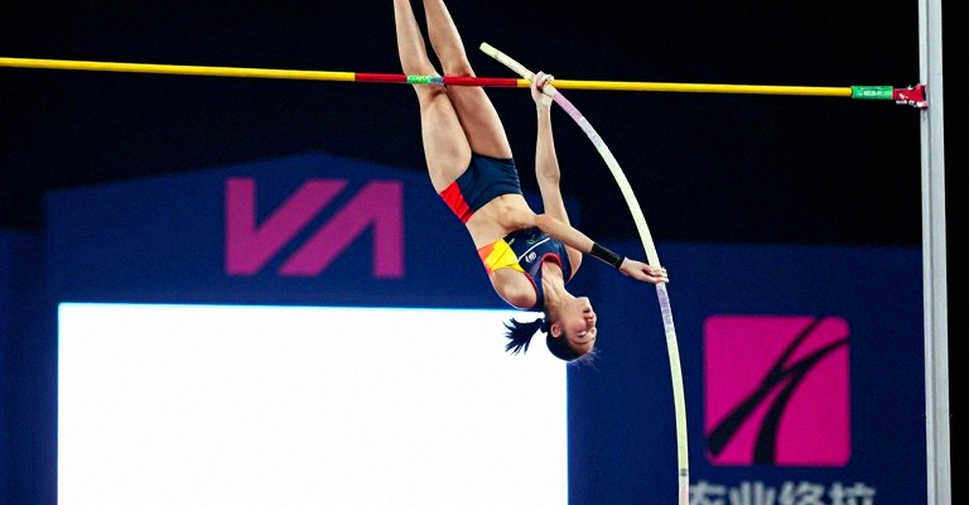
The Asian Games sits beneath the Olympics and the World Championships — a continental multi-sport event where the score is kept for the national delegation, not the way a Diamond League meeting pays appearance fees. That distinction matters, because here the market value of a medal is far larger than its athletic value. State bonuses, sponsor deals, the budget allocation for the next Olympic cycle — all of it hangs on three finals in one evening.
Vietnam's hope of a 'second gold' is scattered across wushu, rowing, canoeing, shooting, swimming, gymnastics and athletics. I do not call that medal depth. I call it a spreadsheet of tickets, one name laid into each sport. And inside that spread, the women's 10,000m becomes a very heavy weight to carry.
Core analysis: three finals, three kinds of risk
Say 10,000m to a spectator and they picture pure endurance. Stand by the track and you see something else: of twenty-five laps, at least eighteen are tactics and the last seven are capacity. The 19:25 slot looks chosen to dodge the midday heat — September in an East Asian host city is still warm and humid, and over twenty-five laps heat dissipation is a genuine limit. The problem is I have the heat-dodging schedule and I do not have the pacing plan. Whether someone goes from the gun or kicks on the last lap is the difference between a medal and nothing. Without a single split I can write a hero's name; I cannot write an analysis.
There is a question hanging overhead that nobody is writing down: in Asian women's distance running, naturalised African athletes representing Bahrain and other Gulf states have pushed the effective medal standard far higher. A SEA Games gold and an Asian Games gold do not carry the same weight. Stepping from the SEA Games tier to the Asian Games tier moves you two levels up in competitive density. The schedule sheet does not say this, because a schedule sheet only says who runs when, not who is good.
The age curve matters quietly here. If this is the twentieth edition, Nguyễn Thị Oanh is around thirty — late peak or the early edge of decline for a 10,000m runner. Someone sharp over 5,000m or 3,000m steeplechase at that age does not easily reconcile twenty-five laps. I suspect her real strength lies in a shorter event, and the media focus has fallen on the longest one because the longest one makes the longest story.
In the triple jump the number is emptier still. A record needs a legal wind reading of +2.0 metres per second or lower; a headwind can cost two metres, a tailwind invalidates the record. Two Vietnamese jumpers reaching a final is a positive signal — there is some event-specific depth. But without marks I cannot say whether they are finalists or medallists. I host the noise, but I study the silence between cues — and here the silence is close to perfect.
The mixed 4x400m relay is the most complex of the three. Two men, two women — order, leg sequence, and the baton handover inside a 20m exchange zone. The final is at 20:25, roughly two and a half hours after the 10,000m. If Vietnam holds a distance runner in the relay pool, another 400m barely an hour and a half after twenty-five laps is physically possible and tactically suicidal. Without the squad composition that is inference, not information. But relay experience tells you most relays are lost not in the semi-final but in the exchange zone of the final.
Contrarian angle: whose expectations are 'high expectations'
The headline carries 'high expectations' for Oanh. The question is who holds the expectation and how much data sits behind it. This copy has no SB, no PB, no recent result, yet the expectation occupies a whole paragraph. If there is not one number for what a medal actually demands in the Asian 10,000m, then the expectation is not a data-driven forecast — it is national media framing.
And here the fault lies with the institution, not the athlete. What Oanh has done at SEA Games level is hers; turning her into a 'golden hope' without testing her at Asian level was the work of the federation, the delegation management and the press. She has to reconcile twenty-five laps; a desk thousands of kilometres away writes the caption. That gap is conveniently invisible.
A metre from my own log
In 2026, hosting a twenty-minute online show from the Manchester Regional Arena, I threw out the interview format and put a live split overlay on screen instead. That gave me the permanent instinct — bury the headline quote, lead with the opening split. Through 32 consecutive days in a Manchester fan zone at Russia 2026 I treated every high press as a sprint start and counted a threshold; it taught the same lesson. Every fan zone has a 0.100 rule; most crowds never hear the gun. An Asiad schedule is the sound of a gun, but nobody is writing who pulls the trigger.
Takeaway: five numbers to watch
Oanh's placing and splits in the 10,000m. The triple jump wind reading. The relay order and each leg split. Vietnam's movement on the medal table. And any post-race disclosure about the athlete's body.
Read a schedule sheet patiently and you learn that a delegation's gold hope is not the product of a continental plan — it is weight loaded onto one name, propped up from several directions. A ghost lane teaches you what remains when the applause is switched off. On the night of September 24 Vietnam will learn whether the second gold arrived. The track already knows that one evening is a news cycle for the federation and twenty-five laps of decision-making for the athlete — who has to get up again the next morning, whatever the result.